
English| EUR
Suggested for you
More currencies
Choose a language
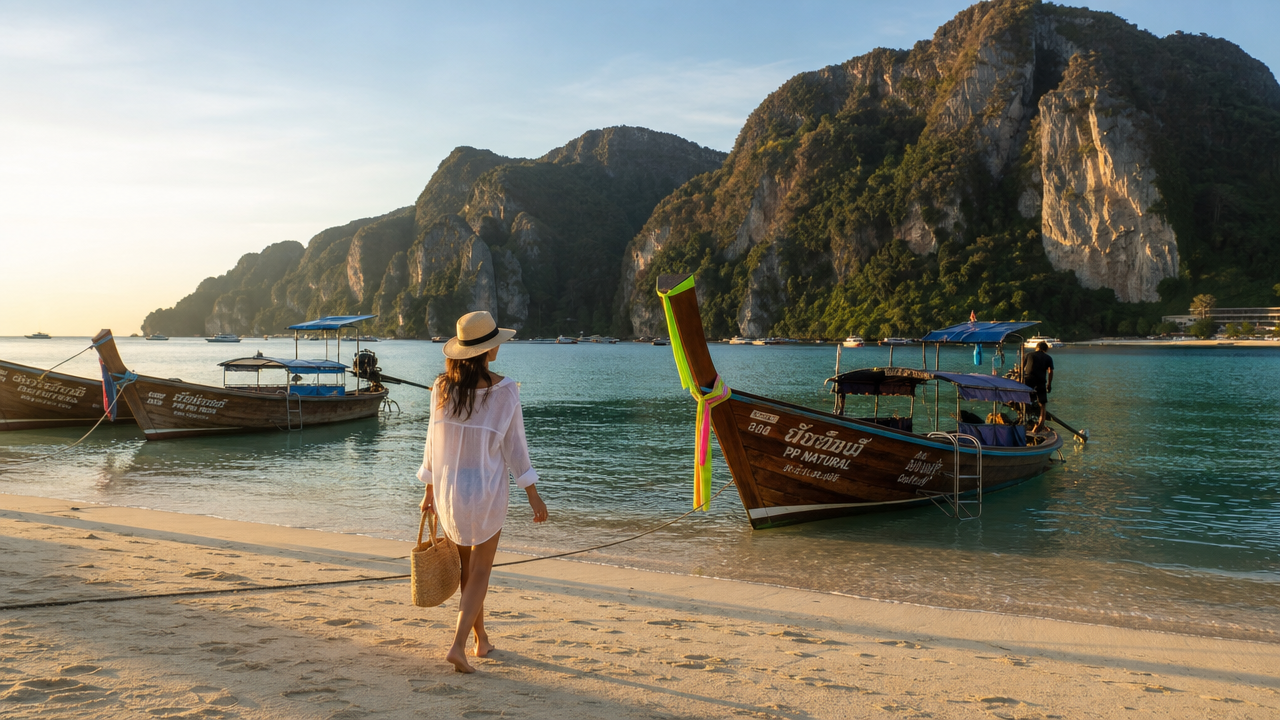
A day in the Phi Phi Islands is a day spent half-wet. Between longtail transfers, wading landings and limestone shade, clothing has to work harder here than it does on a hotel beach in Ao Nang. This what to wear to Phi Phi Island guide sets out the logic behind the packing list, so each choice makes sense before you step off the pier.
Quick answer
Dress for water first: quick-dry shorts or a light dress over swimwear, a long-sleeved rash guard or linen shirt for sun, and secured sandals or water shoes rather than flip-flops. Add a cover-up for villages and boat-to-boat transfers. Arriving between 07:00 and 09:00 means cooler decks, so a light layer is worth carrying at the start.
Almost nothing on the Phi Phi Islands has a car road. Supplies move by longtail and cargo boat, guests walk or ride handcarts through the Tonsai alleys, and the limestone karsts that draw the crowds have no shaded queue to wait in. That single fact reshapes what to wear to Phi Phi Island more than any style question does. Clothing here is equipment: it dries, it shades, and it survives salt. The day usually begins on a boat rather than a beach. Longtail decks are hot teak in the sun and slick underfoot once the first swimmers climb back aboard, and most landings at Maya Bay, Monkey Beach or the Bamboo Island sandbar involve wading the last few metres. Cotton absorbs that water and stays heavy for hours; technical fabrics and linen do not. Footwear follows the same logic. Rubber-soled sandals with a heel strap, or water shoes, hold on wet fibreglass and protect against coral rubble and sea urchins in the shallows, while loose flip-flops are lost overboard with some regularity. Sun exposure is the other constant. On open water there is no shade at all between snorkel stops, and a long-sleeved rash guard does more reliable work than repeated applications of sunscreen — particularly inside the national park, where reef-safe formulations are the expectation rather than a preference. Context changes on land. Tonsai Village, the viewpoint trail and the ferry pier all sit inside a working Thai community, and beachwear that reads as normal on the sand reads differently on a village street or at a temple. A packable cover-up, a sarong or a dry T-shirt in the daypack solves this without a second outfit. The same layer earns its place on the return crossing, when wind and wet swimwear combine into genuine cold. Anyone building a Phi Phi Islands packing list should think in terms of one wet layer, one dry layer and one sun layer, then work backwards from the itinerary. A snorkel-heavy private charter demands different priorities from a viewpoint hike or a Loh Dalum sunset. Use this what to wear to Phi Phi Island page as the framework, then check the checklist, dress-code and timing sections below for the item-level detail — and match the whole thing to the boat trip you actually book.
“On the Phi Phi Islands, clothing is equipment: it dries, it shades, and it survives salt.”
A day on Phi Phi moves from a wet longtail deck to open sand to the narrow lanes of Tonsai village, so pack clothing that handles all three without a change of outfit.
Phi Phi runs on two dress registers: swimwear is normal on the sand, and covered shoulders and knees are expected the moment you step into Tonsai village lanes, shops, or any temple or shrine. Reading the shift correctly is the difference between blending in and drawing visible discomfort from residents.
The best time to visit the Phi Phi Islands is during the dry season from November to April, specifically arriving between 07:00–09:00. This window balances favorable sea conditions with the opportunity to bypass peak congestion.
Dry, 25°C–32°C. Ideal for boat trips and outdoor activities.
Rainy, 24°C–31°C. Expect frequent showers and rougher sea conditions.
—
Early arrival between 07:00–09:00 avoids the primary influx of daily boat tours and midday heat.
Verdict: Plan your visit during the dry season months of November to April, ensuring an arrival window between 07:00–09:00 for the most manageable conditions.
The Phi Phi Islands are accessible throughout the week. While the area remains open daily, planning your visit around specific arrival windows helps manage logistics.
Everything you need to know about what to wear to phi phi island
When considering what to wear to Phi Phi island, prioritize lightweight, breathable fabrics like linen or cotton to manage the tropical humidity. Swimwear is appropriate for the beach and while on board, but you should bring a cover-up for when you are not in the water.
Sturdy sandals or water shoes are recommended when deciding what to wear to Phi Phi island, as they provide better grip on wet boat decks and rocky shoreline terrain. Avoid heavy hiking boots, as they are unnecessary and cumbersome for most island activities.
If your itinerary includes cultural sites, you must dress modestly by covering your shoulders and knees. Planning what to wear to Phi Phi island excursions often involves carrying a lightweight sarong or scarf in your bag for quick transitions at religious locations.
There are no strict legal dress codes for beaches, but locals appreciate modest attire when walking through the village or entering shops. Always keep a t-shirt or cover-up handy to remain respectful of local customs while exploring the island landmarks.
Since you will likely spend time in the ocean, bringing a dry change of clothes is a smart practical choice. This ensures you remain comfortable after your private longtail boat adventure concludes or when moving between air-conditioned areas.
Wearing a rash guard or a light long-sleeved shirt is an effective way to minimize sun exposure during boat transfers and snorkeling. Sun hats and polarized sunglasses are also recommended accessories to include in your ensemble for island visits.
Private Longtail Boat Phi Phi Price
Read more Tickets & toursMaya Bay Snorkeling Private Tours
Read more Tickets & toursPrivate Longtail Boat from Phuket to Phi Phi
Read more Tickets & toursPrivate Longtail Boat from Krabi to Phi Phi
Read more Tickets & toursPrivate Longtail Boat to Maya Bay
Read more